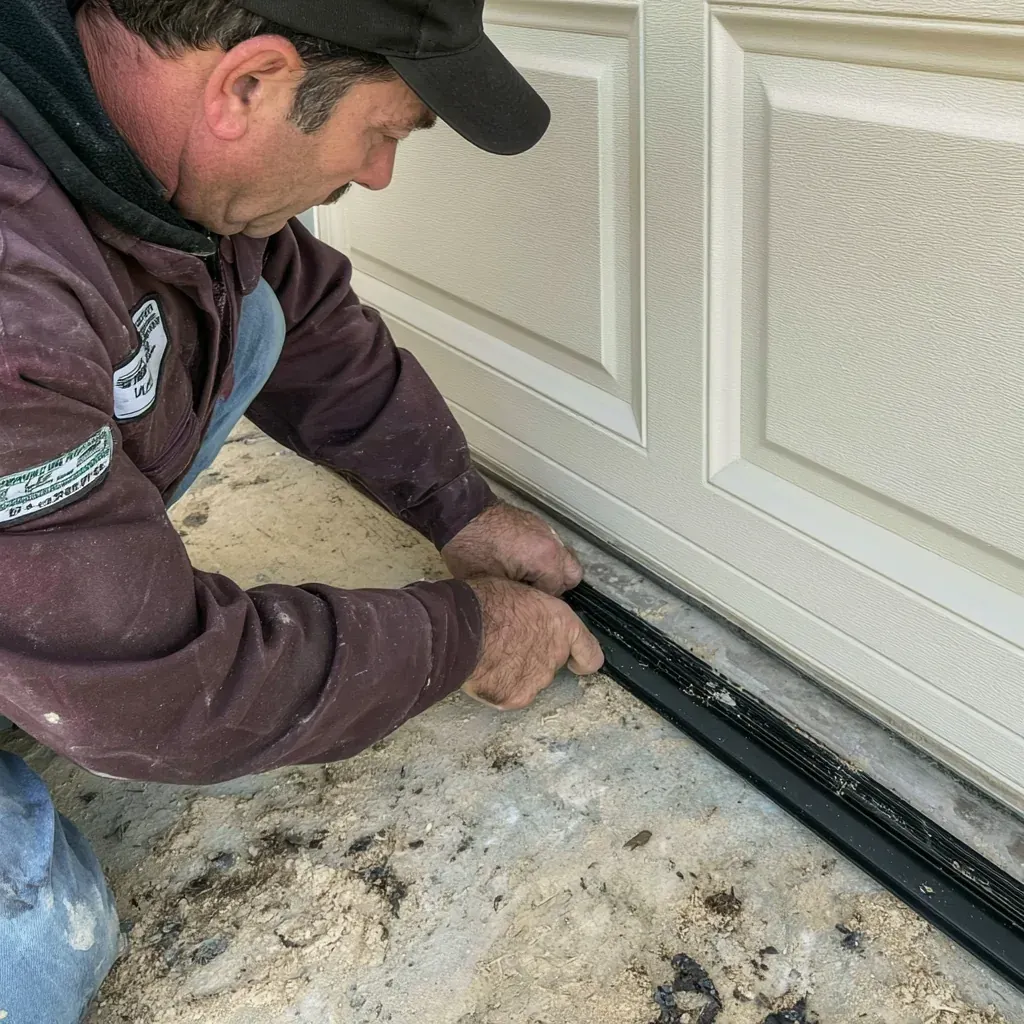
Meltwater Refreezes and Bonds the Door Shut
CHI is known for a wood-grain steel finish that reads as stained cedar from the driveway but is steel underneath, so it holds up to a Fishers winter without the swelling or splitting real wood would take from a 63 degree seasonal swing. Sunblest and Ridgefield have plenty of them.
The Accents line lets an owner swap a window insert or add a decorative overlay without buying a whole new door, which matters in a subdivision like Britton Ridge where half the street ordered the same base model in the same builder year and everyone wants theirs to look slightly different.
A door that will not budge in January is usually stuck to the concrete, not broken. Overnight refreeze bonds the weather strip to the slab, and forcing the opener against that grip is what tears hardware loose. Letting the ice let go first, rather than fighting it, is what actually saves the door.
What Cold Grease Does to an Opener
- Wood-Look Finish
- CHI is known for wood-look steel finishes that carry a stained wood grain look without the swelling, cracking, or repainting that comes with actual wood doors exposed to central Indiana's roughly 63 degree seasonal swing between winter and summer.
- Price Position
- The Accents line adds arched top sections, decorative hardware, and window layouts that read as custom carpentry from the street. It costs more than CHI's plain steel panels but keeps the same steel construction underneath, so it carries the same cold-weather behavior.
- Sold Through
- CHI is distributed nationally, so parts and matching panels are not tied to one installer in Fishers or Hamilton County. That matters most after a hard freeze, when a homeowner wants a second look at a bent panel or a broken spring without waiting on a single source.
- Accents Line
- Wood-look steel through CHI's Accents line gives Fishers homeowners the grain look without the seasonal swelling real wood takes on across a 63 degree swing between January and July, which matters more here than the finish alone.
- Track And Frame
- CHI's track and frame hardware is built to that door's panel thickness and roller spacing, which matters when a driveway apron near Flat Fork Creek Park has heaved slightly and the door needs realigning rather than a full swap.
- Time Of Year
- CHI's wood-look finish holds its color fine through a Fishers summer, but the 63-degree swing into a hard winter stiffens the weatherstripping and can leave an overlay panel binding slightly at the seam. Meltwater refreezing overnight near Geist or Ritchey Woods adds its own strain on the bottom seal.
- Usual Range
- an estimated $1200–$4800
Reading a Snapped Spring at the Coils
CHI gets mixed up with other carriage-style steel doors sold around Fishers and Carmel, since a few manufacturers stamp similar wood-grain texture into steel panels aimed at the same look. The overlay pattern, trim proportions and hardware kit are where CHI's version actually differs. Look on the back side of the top section for a small metal tag with the model line printed on it. CHI's wood-look grain pattern and the way overlay trim sits on the panel face are usually enough to tell it apart from another maker's door once you know to look.
The Commute Depends on This Door Twice a Day
CHI builds wood-look steel doors where the grain texture is stamped deep enough to hold shadow lines instead of looking painted on. Fishers buyers on Britton Falls and Sunblest streets often pick it for that finish quality alongside Accents trim, which swaps in windows, overlays or handles without changing the base door.
CHI's reputation rests on finish quality, the wood-look steel coating that holds up through a Fishers winter better than a painted surface exposed to repeated freeze and thaw. Pricing sits in the middle of the market, between builder-grade steel and true wood doors.
A garage door works twice a day at minimum, more on a commuting morning, and every one of those cycles depends on springs holding their tension and rollers turning freely. Cold snaps make steel brittle and grease stiff at the same time, so the parts most likely to fail do it in the same season, often the same week.
OPENER GEAR WEAR FROM A DOOR STUCK TO THE SLAB
| What Gets Done |
What's Happening |
|---|
| Spring steel that flexes fine in July gets brittle once temperatures drop hard, and a torsion spring under full tension is exactly the part that snaps first on a cold morning rather than easing into failure with any warning. | Fishers homeowners notice it first on a January morning: the opener strains, the chain jerks, and the door lifts an inch before stalling. That extra draw usually means grease inside the rollers has thickened past the point of doing its job, not that the motor itself is dying. |
| A 63 degree swing between winter and summer keeps steel expanding and shrinking all year. Fasteners work loose, panel seams open a hair, and a track that lined up perfectly in July can bind in February without anyone touching it. | Hardware that opens and closes on a schedule shows its wear in predictable places, not all at once. A tune-up catches the part that has quietly loosened, the roller that has started to bind, the sensor lens that has drifted out of alignment, before any of it turns into a call placed from a cold driveway. |
| A door that won't budge after an overnight freeze is usually stuck to the concrete by refrozen meltwater at the threshold, not broken. Trying the opener anyway strains the drive gear and can bend a track. Warm the bottom edge first and check for ice before running it again. | Meltwater from a warm afternoon has a way of refreezing under a garage door by morning. Force the door anyway and the bottom seal tears loose or a bracket bends, and now the opener is straining against a door that was never actually stuck, just bonded to the slab. |
What Is RequiredNone of this touches permitting. Widening an opening or cutting a new one is a matter for the City of Fishers, but swapping a CHI door for another one in the same existing opening generally is not. Ask the city directly, since that call belongs to them and not to whoever installs the door.
How Cold Grease Fools An Opener
Most damage on a CHI door in Fishers is cosmetic at first: a faded panel next to newer ones, a scraped section near the bottom, or grit and road salt worked into the seal after a freeze-thaw stretch. Left alone, that grit is what eventually chews into the rollers and bottom bracket underneath it.
The Repair That Turns Into A Replacement
Swapping in a replacement Accents overlay yourself without matching the existing stain depth risks a panel that reads a shade off next to sections that have weathered through a few Fishers winters already. Parts stay cataloged by design and color for years, so a dealer can usually match the run.
Why HOA Approval Adds Time Before a Repair
A CHI door that stops sealing tight at the slab in Fishers often means the driveway apron has heaved slightly with the frost line, a normal seasonal shift in central Indiana ground. The gap lets meltwater and grit reach the bottom bracket, so a bottom seal adjustment or swap is worth checking each fall.
Get the spring checked before it snaps.
A guide figure for chi overhead doors locally is an estimated $1200 to $4800, which is a band rather than a quote. What is priced here is the hardware and the labor to fit it: springs, cables, rollers, hinges, the bottom seal, opener parts and panel repair. Damage to the building itself is quoted separately once somebody has actually looked at it, whether that is a jamb softened by years of meltwater or a slab edge spalled under the threshold. Find out the visit charge up front, and ask for the scope in writing. Full bands and what moves them are on the pricing guide, and the service that handles this is General Garage Door Repair.