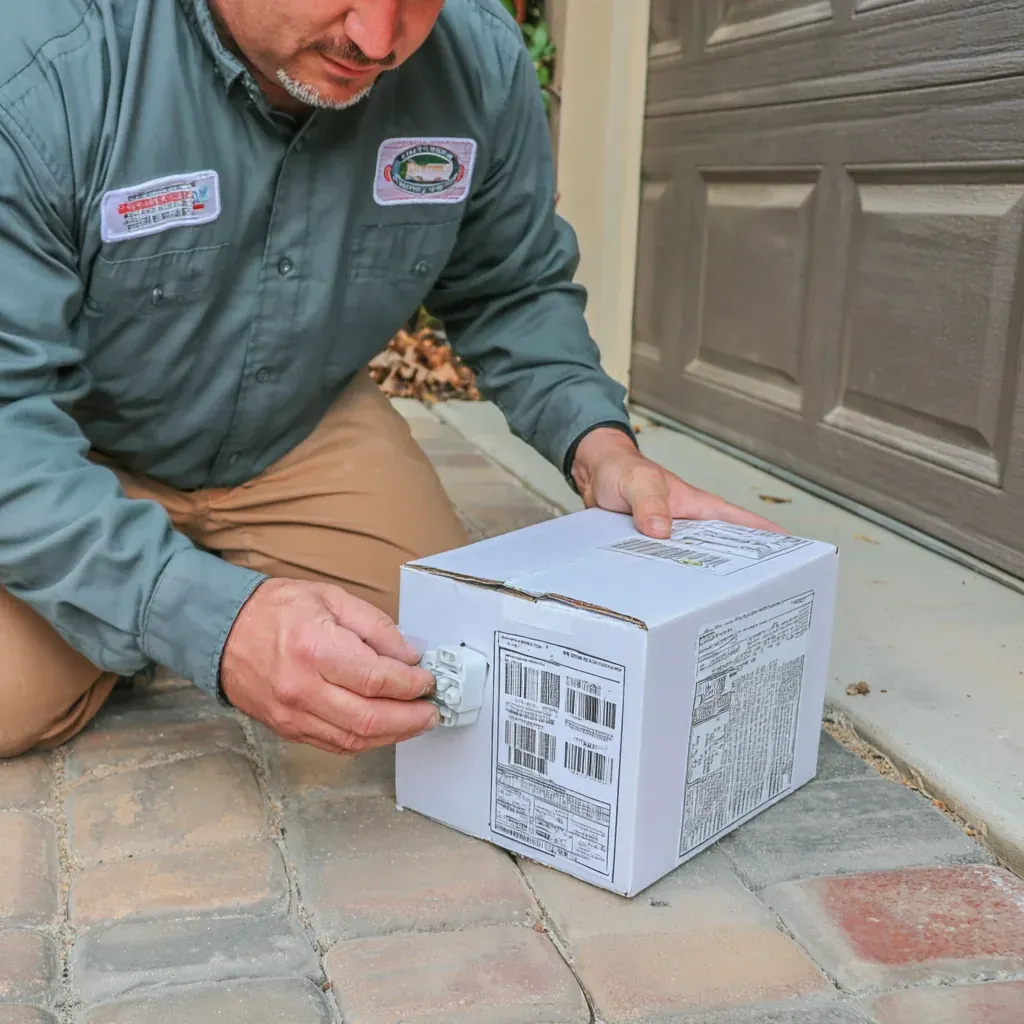
Stiff Grease Looks Like an Opener Problem
A Sommer opener puts the motor on a carriage that climbs the rail on its own, so there is no chain looping back to a sprocket. That design cuts down on the clatter a chain drive makes in a cold Fishers garage, which matters if a bedroom sits above it.
Fewer linked parts means fewer places for road salt tracked in off 116th Street to work into a joint and start rust. The trade-off is that Sommer parts are not sitting on a shelf at every Fishers hardware store, so a repair may take an order.
A door that will not budge in January is usually stuck to the concrete, not broken. Overnight refreeze bonds the weather strip to the slab, and forcing the opener against that grip is what tears hardware loose. Letting the ice let go first, rather than fighting it, is what actually saves the door.
What Cold Grease Does to an Opener
- Origin And Drive
- The defining feature is a motor carriage that rides a rail on a toothed belt and travels toward the door itself, so there is no chain gearbox mounted at the back wall of the garage straining against a frozen door on a January morning.
- Wear Points
- Because the motor moves instead of sitting still, there is no chain stretching or needing tension adjustment over the years. That matters in a Fishers winter, since a chain drive already strains hardest against a door frozen to the slab, and removing the chain removes that specific failure point entirely.
- Noise
- A Sommer opener runs quieter than a chain drive at rest, since there is no chain slapping the rail while the motor travels. The motor itself still produces sound as it moves along the track, so quiet operation is relative rather than silent, which matters most for a bedroom over the garage.
- Parts Supply
- Sommer parts are not stocked on a typical Fishers hardware store shelf. They move through authorized dealer channels, so a specific gear set or logic board may need a short special order rather than a same-day pickup near Interstate 69 or 116th Street.
- Remote Pairing
- Sommer remotes run on rolling-code technology, and units built on the same generation of receiver board usually program together without issue. The homeowner should still confirm against the model number stamped on their own head unit rather than assume every Sommer remote is interchangeable.
- Freeze Behavior
- Road salt tracked off a Fishers driveway settles at the bottom of the rail and mixes with grease into a grit that slows the carriage down. A quick wipe of the rail each winter, done before the cold sets the grease thick, keeps a Sommer opener moving the way it should.
- Estimated Cost
- an estimated $129–$549
Reading a Snapped Spring at the Coils
Owners near Nickel Plate District often mix Sommer up with other European belt-and-rail openers carried by the same small dealer networks, since the housing shape and rail width look nearly identical at a glance. Checking the model plate on the traveling motor housing settles which one is actually installed. The clearest way to tell is watching the unit run: the motor housing itself slides along the rail rather than staying fixed near the header. The model number printed on that housing settles it if the visual check is not enough.
The Commute Depends on This Door Twice a Day
Because the Sommer motor rides along the rail instead of staying fixed at the header, a door that hesitates or slows near Cumberland Road often points to that carriage and belt, not the springs. A tech checks belt tension and rail alignment before touching anything else.
When a Sommer carriage or belt has worn out after years of use in a Fishers garage, replacement parts typically come through order rather than off a shelf, so expect the repair to take a short lead time compared to a common chain-drive part.
Springs wound for a specific door weight get stiffer and more brittle as steel cools, which is why a spring that snapped once might have gone another five years in warmer air. Replacing it under load without a full understanding of that tension is how a hand gets hurt.
OPENER GEAR WEAR FROM A DOOR STUCK TO THE SLAB
| Why It Happens |
What To Do |
|---|
| Spring steel that flexes fine in July gets brittle once temperatures drop hard, and a torsion spring under full tension is exactly the part that snaps first on a cold morning rather than easing into failure with any warning. | Fishers homeowners notice it first on a January morning: the opener strains, the chain jerks, and the door lifts an inch before stalling. That extra draw usually means grease inside the rollers has thickened past the point of doing its job, not that the motor itself is dying. |
| A 63 degree swing between winter and summer keeps steel expanding and shrinking all year. Fasteners work loose, panel seams open a hair, and a track that lined up perfectly in July can bind in February without anyone touching it. | Hardware that opens and closes on a schedule shows its wear in predictable places, not all at once. A tune-up catches the part that has quietly loosened, the roller that has started to bind, the sensor lens that has drifted out of alignment, before any of it turns into a call placed from a cold driveway. |
| A door that won't budge after an overnight freeze is usually stuck to the concrete by refrozen meltwater at the threshold, not broken. Trying the opener anyway strains the drive gear and can bend a track. Warm the bottom edge first and check for ice before running it again. | Meltwater from a warm afternoon has a way of refreezing under a garage door by morning. Force the door anyway and the bottom seal tears loose or a bracket bends, and now the opener is straining against a door that was never actually stuck, just bonded to the slab. |
What Is RequiredIndiana does not run a contractor license for garage door work, so a Fishers homeowner is better off asking about liability coverage, workers compensation, and a written price before work starts than looking for a license number that would not exist anyway.
What A Slab-Bonded Door Signals
An insulated door installed later than the opener was matched for puts ongoing strain on a Sommer motor, something that turns up around Fishers as older tract homes get storm doors and heavier panels swapped in without the opener being reconsidered at the same time.
Why HOA Rules Change The Timeline
A homeowner can wipe down the rail and clear obvious debris on a Sommer opener without tools. Anything involving the drive belt, the force settings, or the circuit board is worth leaving to the licensed pros we connect you with, especially once a Fishers winter has already stressed the door and spring.
Why HOA Approval Adds Time Before a Repair
A Sommer opener that runs strong on an empty rail but bogs down once it meets the door is usually describing a spring problem, not a motor problem. That pattern shows up often in Fishers once original springs from 1990s and 2000s tract construction reach the end of their working life together.
Find out what's actually wrong today.
Treating sommer usually runs an estimated $129 to $549. That is a budgeting figure, not a price. What is priced here is the hardware and the labor to fit it: springs, cables, rollers, hinges, the bottom seal, opener parts and panel repair. Damage to the building itself is quoted separately once somebody has actually looked at it, whether that is a jamb softened by years of meltwater or a slab edge spalled under the threshold. Find out the visit charge up front, and ask for the scope in writing. Full bands and what moves them are on the pricing guide, and the service that handles this is General Garage Door Repair.