Two Cycles a Day Wear Parts Faster
Raynor moves through local dealers rather than a warehouse aisle, so a homeowner near Allisonville Road or out toward Geist usually traces parts back to whichever dealer handled the original install, since that relationship is what keeps ordering and warranty work straightforward.
Raynor sells through local dealers, not home centers, so a homeowner in Fishers usually first meets the name on a door already installed. The ShowCase line and other sectional steel doors come in several insulation grades, which matters across a swing from a January cold snap to a humid Indiana summer.
Approval paperwork is not the only delay a covenant can cause. Getting a new spring rated correctly matters too, because the wrong tension leaves a door heavy enough to strain an opener within a season, well before any style question ever reaches a board.
Road Salt Working Up From the Floor
- Sold Through
- Raynor sells through a dealer network rather than home-improvement retailers, so a Fishers homeowner typically ordered through whoever installed the door originally. That dealer link matters years later: parts, warranty claims, and model matching all route back through that same channel instead of a generic counter.
- Insulation Options
- Raynor's residential range runs from plain steel sectional doors through a carriage-house style series, the kind seen on newer construction around Geist Overlook and the Fishers District. Insulated cores are available on several lines for homes where the garage sits under living space.
- Spring Sizing
- Raynor builds steel sectional doors sold through local dealers rather than home centers, with construction that follows standard sectional door practices across the industry. Panel styles and insulation cores vary by line, and Hamilton County dealers can usually match an older door's profile when a section needs replacing after years of freeze and thaw.
- Opener Line
- Raynor's ShowCase opener line ships through the same dealer network as the doors, though nothing stops a Fishers homeowner from pairing a different opener brand with a Raynor door.
- Remote Pairing
- Raynor openers use the same rolling-code standard most of the industry relies on, so a universal remote or keypad generally programs fine. Matching an original remote by model number goes faster, since the licensed pros we connect you with can confirm compatibility on sight rather than by trial and error.
- Season
- A Raynor door in Fishers deals with the same freeze-thaw cycle as any other brand here. Meltwater refreezes overnight, bonding weatherstripping to the slab, and forcing a stuck door open tears the seal and can push the opener's force setting out of spec.
- Guide Price
- an estimated $1200–$4800
Rust Climbs the Door, It Does Not Fall On It
Raynor gets mixed up with other dealer-channel manufacturers whose sectional panel styles and model naming look similar side by side, since several brands in this space offer comparable steel-faced lines with matching insulation tiers and similar-looking end stile stampings. The mix-up usually happens when a Fishers homeowner is trying to match a damaged panel and assumes any dealer-sold door swaps in the same way. Confirming the brand and model stamp first, rather than guessing from panel style alone, is what actually prevents an order mismatch.
What a Fishers Winter Does to Springs
Because Raynor sells through dealers, matching a damaged panel or a worn hinge set starts with reading the model stamp, usually found on the door's end stile, rather than guessing at a generic replacement that may not fit the track hardware.
Raynor sells through independent dealers rather than one national counter, so parts availability in Fishers depends on which dealer near the I-69 corridor still carries that model's panel and hardware line. Older doors from the Sunblest or Britton Ridge building years sometimes take longer to match.
An opener drawing harder than usual to lift the same door is often reporting on the rollers, not itself. Grease that has thickened in the cold adds resistance the motor was never sized for, and a gear stripped from that strain costs more than the grease would have.
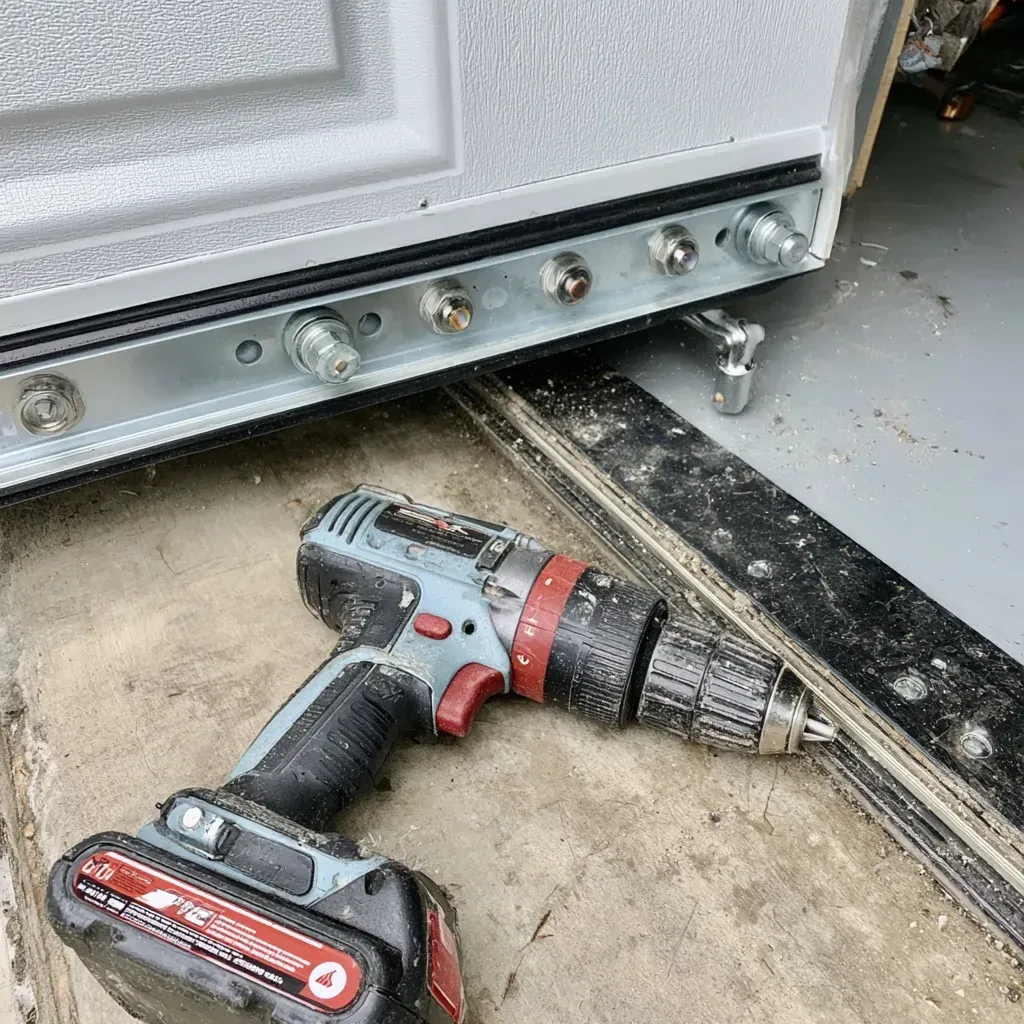
BOTTOM BRACKET MATERIAL AND HOW FAST FLOOR-LEVEL RUST SETS IN
| What Gets Done |
What's Happening |
|---|
| A slow-closing door in January usually isn't the opener giving up. Cold grease stops flowing the way it should, rollers drag against thickened lubricant, and the motor pulls harder current to move the same weight. That extra strain is what wears out gears and capacitors well ahead of schedule. | Freeze and thaw cycles work a different kind of grit into rollers and hinges than dust ever could. Meltwater carries road salt off the slab into the track, then refreezes overnight and locks grit against the metal. Sealed bearings and heavier-gauge hardware shrug off that abrasion instead of wearing thin from it. |
| Meltwater running off the roof in the afternoon has nowhere to go but the slab, and it sits there until the temperature drops again overnight, gluing the weight of the door to the concrete before the first cycle of the day. | A garage door built for one climate keeps behaving that way even after decades of freeze and thaw. Steel spring wire stiffens and cracks, seals lose their grip on cold slab concrete, and lubricant thickens until rollers drag instead of turning. Panel skins and hardware near the floor take the slowest, quietest damage of all. |
| Steel spring wire loses give as it gets cold, so the same lift that was routine in July can snap coils outright once temperatures drop hard. Add a winter's worth of stiff, unresponsive grease in the rollers and an aging spring is carrying load it was never rated for. | Grease that lubricates fine in July can turn sluggish once temperatures drop, and rollers start dragging against tracks that used to move quietly. The opener compensates by pulling more current to lift the same weight, and that extra strain is usually the first sign something upstream needs attention. |
Where The Rule SitsRaynor's steel and wood lines follow ANSI/DASMA construction standards for panel strength and thickness, so a replacement section from another era of the same series still fits without reworking the track. Its opener line, sold alongside the doors, meets the same nationwide reversing and sensor rule every current opener must carry.
Why HOA Approval Adds Real Time
A Raynor panel dented by a dropped ladder or a driveway mishap near 116th Street usually doesn't call for replacing the whole door. Dealer-sourced panels let the licensed pros we connect you with swap just the damaged section and keep the rest of the door intact.
When The Opener Is Not The Problem
Checking the model tag inside the door or snugging a hinge bolt you can reach by hand is fine for most owners. Torsion springs and the wound cable holding them under tension are not; that stored energy can maim someone who has not set up a door before.
How a Commute Depends on One Working Door
Raynor's steel sections hold up fine here, but check the balance before a cold snap tests it. Lift the door by hand near Ritchey Woods or anywhere in Fishers: if it fights you or drops fast, the torsion spring is losing tension, and brittle spring steel is what gives out first on a hard freeze morning.
Still waiting on that door to move?
Most raynor jobs in Fishers land between an estimated $1200 and $4800, and the property decides where inside that. What is priced here is the hardware and the labor to fit it: springs, cables, rollers, hinges, the bottom seal, opener parts and panel repair. Damage to the building itself is quoted separately once somebody has actually looked at it, whether that is a jamb softened by years of meltwater or a slab edge spalled under the threshold. Find out the visit charge up front, and ask for the scope in writing. Full bands and what moves them are on the pricing guide, and the service that handles this is General Garage Door Repair.