Every part on a Fishers garage door makes its own kind of noise when it starts to fail, and the trick is matching the sound to the source before it strands the car inside on a work morning. A sharp bang usually means a spring, a rising grind points to metal wearing on metal, a rattle is loose hardware working itself free, and a squeal comes from something spinning without help. Listen for where the sound happens in the cycle, not just how loud it is.
A Loud Bang
A bang usually means a torsion spring has broken. The door is sitting near Fishers homes on a cold morning when the steel, already brittle from a hard freeze, finally lets go under tension. You will see one spring gapped open above the header at 116th Street level or wherever the door sits, and the door will feel far heavier by hand. This is not a part to keep using. It can wait for daylight, but not for the next lift.
A Steady Grinding
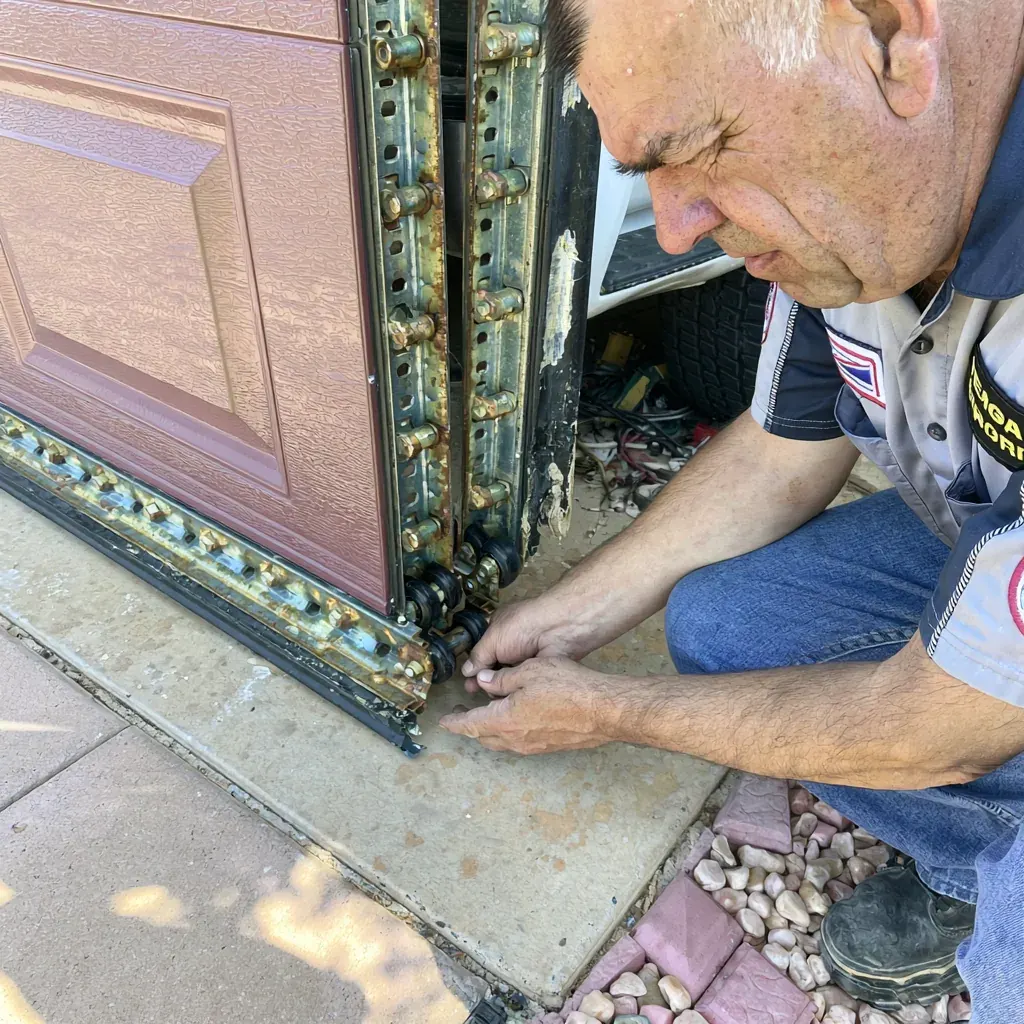
Grinding is a continuous, mechanical sound that rises and falls as the door travels, not a single event like a bang. It points to metal or nylon parts rubbing without enough clearance or lubrication between them, or a part that has worn out of round. Rollers and bearings carry this kind of load, and either one can start grinding well before it fails outright, giving a homeowner in Fishers a window to notice before it worsens.
Rollers Losing Their Round
A roller runs on a sealed bearing pressed into a nylon or steel wheel, and it is meant to turn smoothly inside the track. Once the wheel flattens on one side or the bearing inside it seizes, the roller stops rolling cleanly and starts dragging against the track wall instead, which is what produces that rising and falling grind on every pass.
A Bearing Going Bad
Bearings also sit at each end of the torsion spring shaft, where they carry the full twisting load of the spring rather than just the door's weight. A bearing here running dry grinds in a steadier, lower tone than a roller does, and it tends to worsen faster because the shaft never stops turning while the door moves, unlike a single roller that only touches the track intermittently.
A Rattle at the Panels
A rattle is different from a grind. It is a loose, metallic shake rather than a continuous drag, and it usually comes from hardware that has backed off rather than a part that is wearing out. Hinge bolts, the bracket holding a roller stem, or a loose section of track along Cumberland Road-style attached garages can all rattle on a door that is otherwise mechanically sound and not in immediate danger of failing.
A Squeal on Opening
A squeal is higher pitched and shorter than a grind, often heard only at the start or end of travel rather than the whole way through. It usually comes from the opener's drive gear or from a chain drive under tension rather than from the rollers or track, and it tends to show up on older openers around Hamilton County that have run for years without the gear ever being replaced.
The Cold Morning Pop
A pop on the very first lift of a cold morning, and never again the rest of the day, is its own category. It is usually the sound of a seal or bottom bracket breaking free from ice that formed overnight where meltwater sat at the threshold, not a mechanical part failing. Once the door is up and cycled a couple of times, that particular pop tends not to repeat until the next hard freeze.
Where Grinding Shows Up First
In Fishers, grinding tends to start at the bottom rollers before it reaches anything higher in the track. Road salt and de-icer riding in on tires collect at the lowest few inches of track through winter, and that grit works into the roller bearing from the floor up rather than settling evenly along the whole run, which is why the bottom rollers wear out ahead of the rest.
One Spot or the Whole Run
A loud pop the first time the door lifts on a frigid morning along 116th Street or anywhere else in Fishers is usually just cold grease letting go of its grip on the drive gear or the torsion spring coil, not a part breaking. It clears after the first cycle and does not need a call. If that same pop keeps happening every single morning through January, the grease has thickened for good and the part underneath is working harder than it should.
Noises That Can Wait
Not every sound needs attention the same day. A rattle in loose hardware or an intermittent squeal from an aging opener gear can usually wait for a scheduled look without getting worse in the meantime. A grind that is spreading, or any bang from the spring, is the kind of change in sound that means the part behind it is closer to failing than it was a month ago.
When It Cannot Wait
The value in sorting these sounds out is knowing which one changes your week and which one does not. A homeowner near Geist Reservoir dealing with a loose rattle is in a different position than one hearing a bang from a spring or a grind that has spread across the whole track, and the sound itself is usually the clearest signal Fishers weather gives before something actually breaks.
Dealing with this in your home?
Fishers garages sit on slabs that go through the same freeze and thaw all winter, and meltwater from a sunny afternoon on Cumberland Road or 116th Street refreezes overnight into a bond between door and concrete. Force it and the bottom seal tears. Road salt tracked in off I-69 does the rest, working the bottom brackets and rollers from the floor up.