Homeowners near Geist Reservoir or off 116th Street usually start asking this in early March, once the freeze breaks and a door that stuck all January starts moving again. Fishers gets four real seasons, and a garage door shows every one of them. Rather than reacting each time something drags or sticks, a simple pass through autumn, winter, spring and summer catches most trouble before it strands somebody halfway through backing out of a Sunblest or Britton Ridge driveway.
Autumn Sets Up The Seal
Autumn is about sealing the door against what winter is going to throw at the threshold. That means checking the weather seal along the bottom and sides before the first hard freeze sets in, because a seal that has already cracked cannot do its job once ice and meltwater start working at it. This is covered in the winter checklist, so treat autumn as the setup work that makes that checklist worth running.
Winter Has Its Own List
Winter in Fishers is a different problem entirely, and it gets its own detailed checklist elsewhere on this site rather than a repeat here. What matters for the calendar view is timing: winter is when road salt and brine start riding in on tires and settling at the base of the track, and when thickened grease starts making a fine opener work harder than it should. That checklist is the one to follow once the cold actually arrives.
Spring Is For Balance
By May, the freeze is done and the question shifts from whether the door will open to whether it is opening correctly. Lift the door halfway by hand with the opener disconnected: if it drops or climbs on its own, the balance is off and the springs are carrying the wrong load, which is worth having the licensed pros we connect you with check rather than adjusting yourself. Same visit, run the safety reverse test and confirm the photo eye still catches a hand waved through the track, since a hard winter can knock either out of alignment without any obvious sign at the door itself.
Summer Wears On The Opener
Summer in Fishers is not the mechanical stress test that winter is, but it is the season the opener tends to show its age. Humid summers in the 80s, paired with a warm attached garage, let untreated steel hardware pick up rust even without the salt exposure winter brings. Summer is also a reasonable time to look at the opener itself, since the safety reverse and photo eye rarely get checked until something forces the issue.
Why The Order Matters
The order these seasons come in is not arbitrary. Autumn's seal work is wasted if winter's salt and cold have already damaged a bracket. Winter's checklist assumes the seal was already handled the season before. Spring's balance test means more once the winter stress that caused the imbalance has actually passed. Skipping ahead to any one season out of order just means catching a problem after it has already spread to the next part.
Lubrication Changes By Season
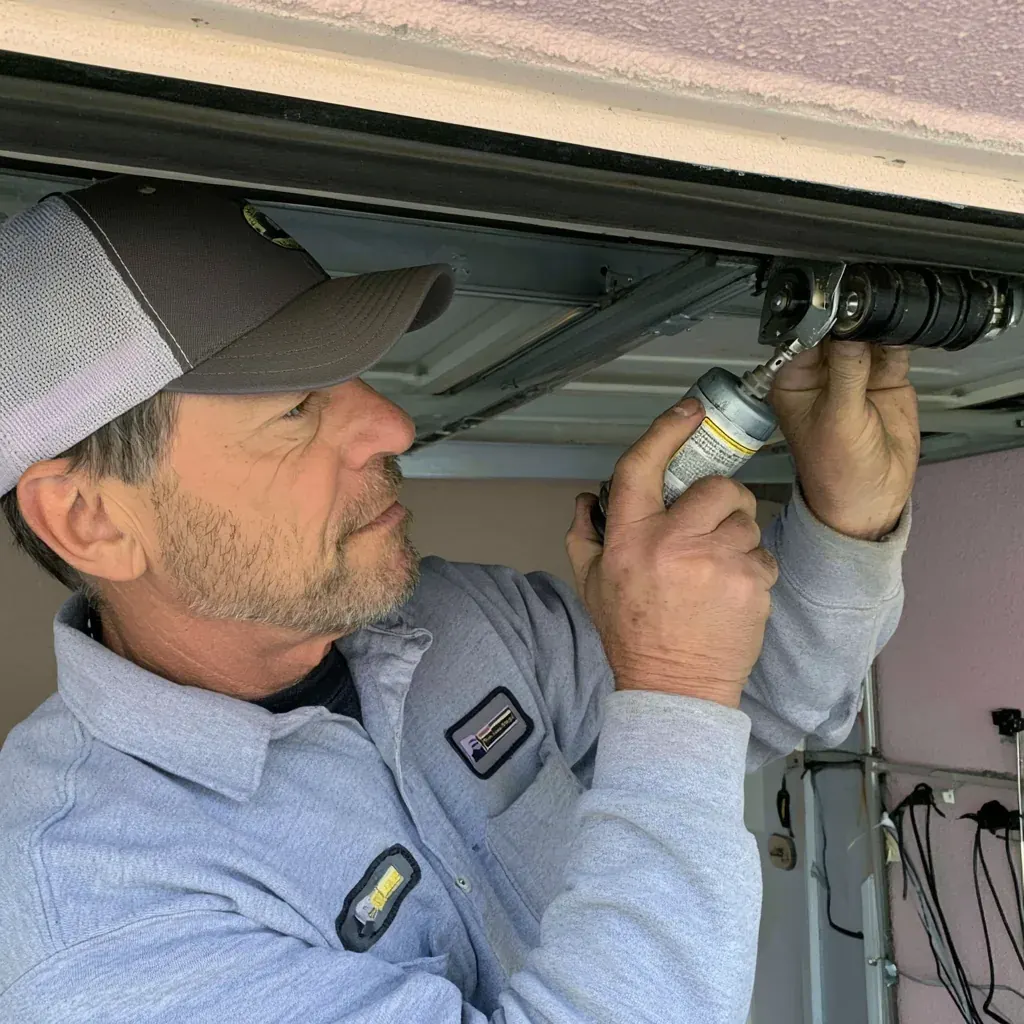
A lubrication routine that only happens once, at whatever point in the year somebody remembers it, does less than the same amount of oil applied at the right seasonal moments. Rollers and hinges that get a fresh coat heading into winter behave differently than the same hardware lubricated in July, because cold grease and hot grease do not carry a load the same way. Track and hinges both benefit from being wiped clean first, in any season.
Two Fixed Points A Year
A homeowner who wants to hit all four seasons without turning it into a part-time job can anchor the year around two fixed points: the seal and threshold check before the first freeze, and the balance and hardware check once that freeze has passed. Winter and summer fill in around those two, mostly as watching rather than working, unless the door starts telling you otherwise with a new sound or a new drag.
Location Shifts The Weight
A door near Geist Reservoir that sits in a humid attached garage all summer is fighting a slightly different fight than one on a street off Cumberland Road that gets more direct winter exposure to salt spray off the road. Neither is worse, they just mean the same four-season calendar puts weight on different seasons depending on where in Fishers the door actually sits.
Heavier Doors Feel It Sooner
A door on a wide double opening near Hamilton Southeastern High School or a smart opener installed in a newer build off 116th Street both run through the same four seasons, but heavier doors and busier households tend to feel a skipped season sooner. More weight on the springs and more cycles through the opener both shorten the gap between a missed check and a noticeable problem.
Catching Up After A Missed Year
None of this replaces a look from the licensed pros we connect you with, particularly once a door has gone through a full year without any seasonal attention at all. A door that has been ignored across autumn, winter, spring, and summer alike is not just due for one fix, it is due for a look at whichever part had the least attention across all four.
Why The Order Matters
The four-season view exists because a garage door in Fishers experiences a real winter and a genuinely humid summer, not a mild version of either. Anyone weighing whether to catch up on a missed season, especially heading into the cold months near Ritchey Woods Nature Preserve or anywhere else in Hamilton County, is better off scheduling that catch-up before the season it belongs to actually arrives, not during it.
Dealing with this in your home?
Fishers garages sit on slabs that go through the same freeze and thaw all winter, and meltwater from a sunny afternoon on Cumberland Road or 116th Street refreezes overnight into a bond between door and concrete. Force it and the bottom seal tears. Road salt tracked in off I-69 does the rest, working the bottom brackets and rollers from the floor up.