A door that suddenly sits crooked in its frame, low on one side with a length of braided cable pooled on the concrete near the track, has lost a lift cable. It usually happens fast, mid-cycle, with a sound loud enough to bring someone out of the kitchen in a Fishers house near Cumberland Road to see what broke. Nothing about the door looks stuck. One side is simply no longer held up.
What The Cable Carries
Each side of a Fishers garage door has its own cable, one on the left and one on the right, wound around a drum that turns as the opener or the springs do the lifting. The bottom end fastens to a bracket at the base of the panel. That cable is what actually holds the weight once the springs have done their work, so when it lets go on a January morning, the door drops on whichever side lost tension, sometimes cocking sideways in the track.
The Spring Behind The Break
Cable does not usually fail from simple age. It is wound steel, rated for thousands of cycles, and the reason it lets go early is almost always upstream at the spring. A spring that has lost tension, or one that has already broken, shifts the door's full load onto the cable and drum instead of letting the spring carry most of it. The cable was never meant to be the primary support, and it shows the strain quickly once it becomes one.
Fraying You Can Spot Early
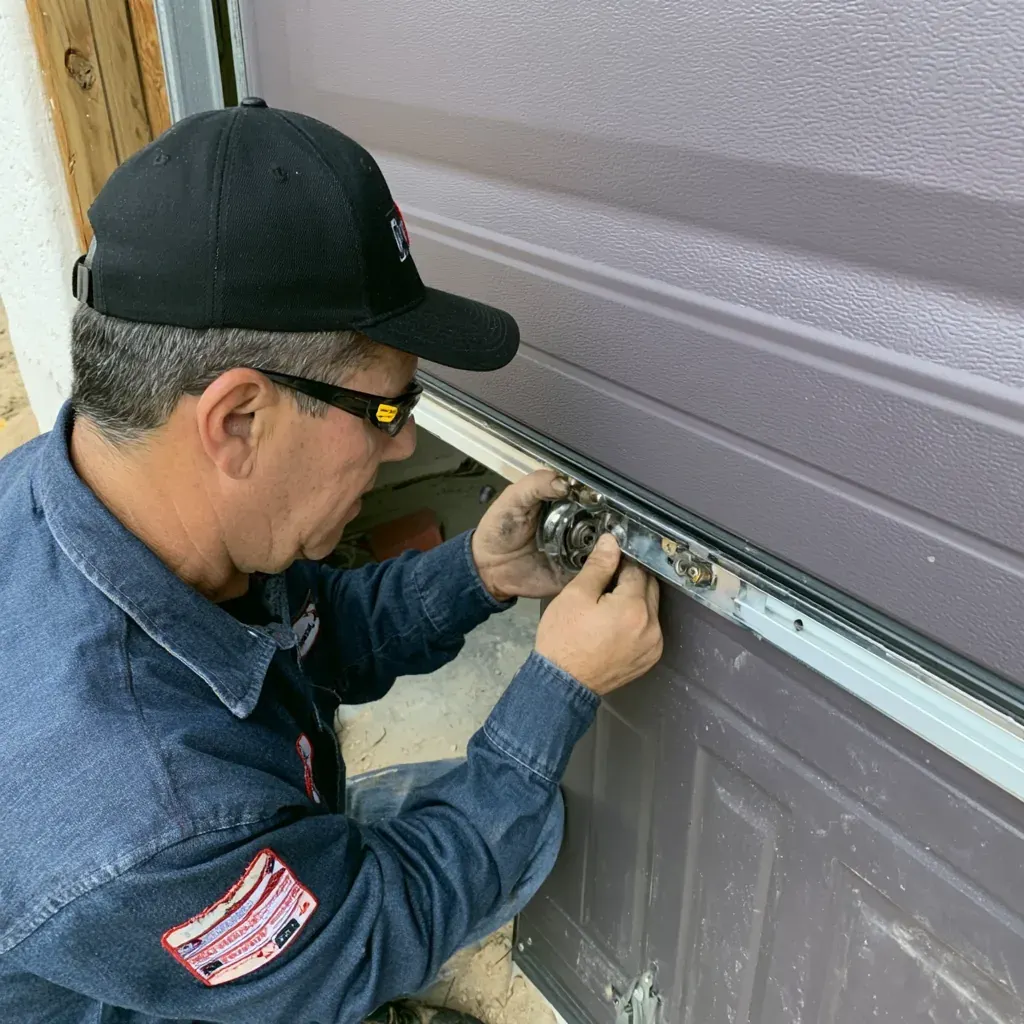
Watch the section of cable that rides against the drum grooves and the short stretch that passes over the bottom bracket roller. Repeated winding and the grit road salt tracks in off a driveway apron wear those two spots faster than the rest. A few broken strands sticking out like small wires, a rusty patch where the coating has worn through, or a kink that will not straighten are your warning. Once you see it, stop opening the door and call before it parts.
Replacing The Matching Cable
The cable on the other side has carried the door the exact same number of times, through the same salt and cold that weakened the one that broke, so a Fishers homeowner replacing just the snapped side is usually setting up a second call. Pros who work on this typically swap both cables together, since matching wear means matching age, and mismatched cable diameters or lengths can throw the door off level even after a clean repair.
The Sound And The Angle
The bang homeowners describe is the cable releasing all its stored tension in an instant rather than gradually. The crooked door that follows is simple mechanics: one side of the door is still attached to a working cable and drum, and the other side has nothing holding it but the track. It settles at whatever angle gravity and the remaining hardware allow, which is rarely level and never safe to force further.
Cold Mornings Make It Worse
Fishers gets real winter, and a hard freeze is when a marginal spring tends to finally let go. Cold makes spring steel more brittle right at the moment grease inside the coil thickens and stops moving freely, so the spring is working harder while it is least able to flex. A cable snap that shows up in January in a garage off 116th Street or near Ritchey Woods Nature Preserve usually has months of quiet wear behind it, not a sudden defect.
Salt, Slabs, And Fishers Driveways
Fishers driveways collect winter brine that vehicles carry off Allisonville Road and 116th Street, and that residue settles at the base of the door long before anyone notices it. It works into the bottom brackets, the lowest track section, and the roller pins, so metal that should flex a little goes stiff and starts pitting. A cable riding a corroded drum edge frays faster than one on a clean drum, and a frayed strand under full spring tension is exactly what lets go with a bang on a January morning.
Reading A Door Hung Crooked
A door sitting at an angle after a cable failure is not jammed, it is missing support on one side, and running the opener again will not fix that. Trying to force it level, by hand or by opener, puts sudden load on whatever cable, drum and bracket are still holding, which is exactly how a second failure happens minutes after the first. The safest move is to leave the door where it settled until someone can look at the spring and both cables.
Why This Waits For A Pro
A cable job looks simple until the torsion spring above the door enters the picture. That spring stays wound tight whenever the door is down, holding real force against the drums and cables even with everything sitting still and quiet in a closed Fishers garage. Loosening a cable without first controlling that spring is how a bar or a hand gets caught in a system that releases stored energy all at once, which is why this step is where a homeowner's job ends and the licensed pros we connect you with take over.
Two-Car Doors Carry More Load
Fishers has some detached garage bays and shop-style doors, particularly on newer builds near Southeastern Parkway, that use a taller track and a larger drum set higher on the wall than a standard residential door. Those setups carry more cable per side and take longer to rewind correctly during a repair. A crew working on one of these should expect the job to run past what a standard single-car door takes, simply because there is more hardware to reset.
Getting It Looked At Right
Once a cable lets go, the door is not moving on its own power again until the drum, the matching cable and the spring behind it are all handled together. That is a heavier job than the bang and the crooked panel make it look. Someone getting a quote in Fishers should expect the whole assembly discussed as one job, not a patched cable on a spring nobody looked at.
Dealing with this in your home?
Fishers garages sit on slabs that go through the same freeze and thaw all winter, and meltwater from a sunny afternoon on Cumberland Road or 116th Street refreezes overnight into a bond between door and concrete. Force it and the bottom seal tears. Road salt tracked in off I-69 does the rest, working the bottom brackets and rollers from the floor up.