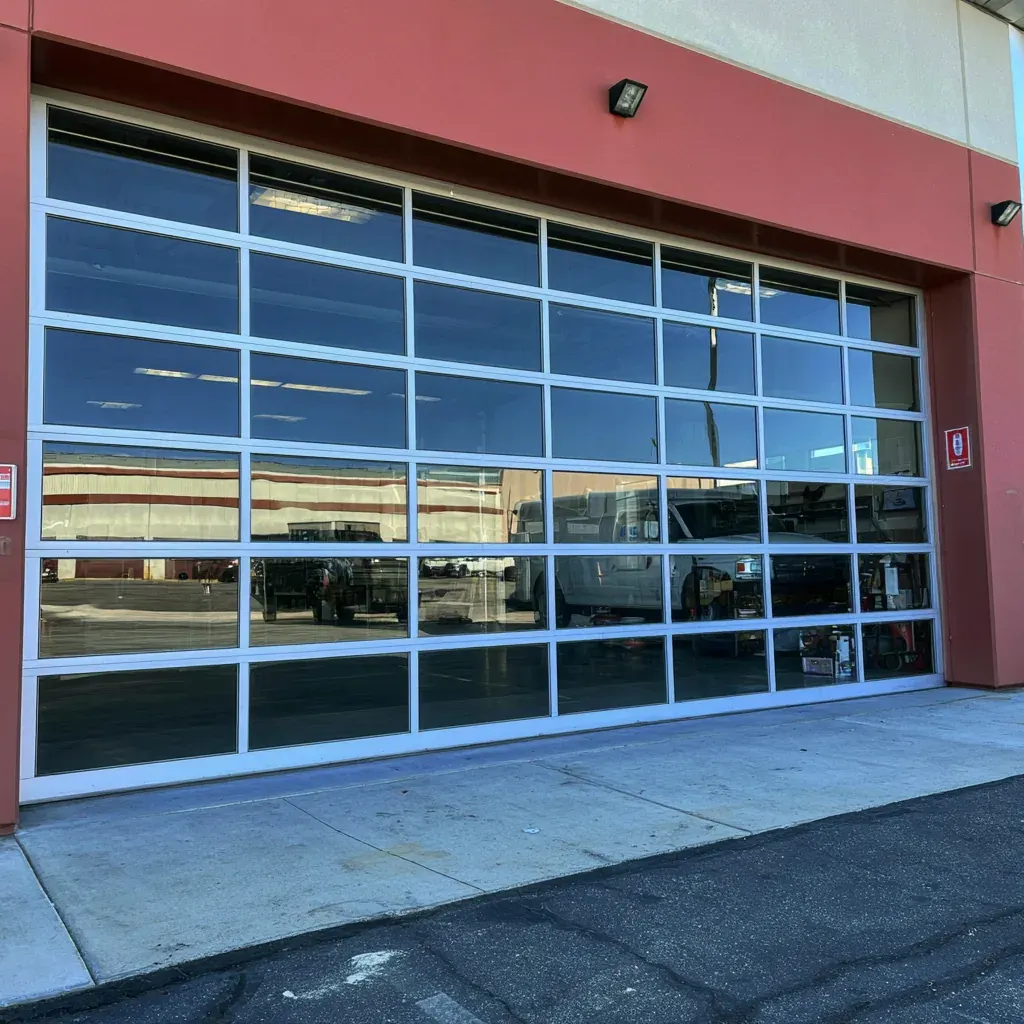
What Each Garage Door Seal Does in Fishers, IN
The bottom seal, astragal, stop, and threshold seal, each doing a separate job.
The bottom seal closes the gap under the door, the astragal seals between double doors, the stop molding seals the sides and top, and the threshold seal blocks water at the slab. Each fails differently in a Fishers winter.
The Bottom Seal and Bracket
The bottom seal is the vinyl or rubber bulb held in a retainer track that runs the width of the door's bottom edge, and it travels down with the door every time it closes. In Fishers that edge does more work than the rest of the door combined, meeting whatever sits on the slab at 116th Street driveways or Geist garages after a plow has pushed snow against the opening. The retainer lets a torn seal slide out and a new one slide in without touching the bottom brackets.
The threshold seal is a different piece entirely, a low bead fixed to the concrete slab under the door rather than to the door, and its job is stopping meltwater from tracking in past the bottom seal during a thaw. Perimeter seal is the broader term covering the stop molding along both sides and the header, keeping wind-driven snow and draft out of the gap between door face and frame. A Fishers garage with a driveway that slopes toward the slab depends on the threshold seal more than most.
On a double door, the astragal closes the vertical seam where the two leaves meet, a job the bottom and perimeter seals cannot do because that gap runs top to bottom instead of along an edge. It is usually a bulb or fin of vinyl screwed to the meeting stile of one leaf, and on an older door around Geist or Ridgefield it is often the first seal a homeowner replaces, since it flexes with every cycle of the opener.
Astragal Between Double Doors
Vinyl bottom seal in Fishers fails from cold more than from age. Indiana winters run roughly 63 degrees colder than the July high, and vinyl that was pliable in August turns stiff and glassy by January. A door forced open while the seal is bonded to a skin of refrozen meltwater tears the bulb right out of the retainer, which is why so many bottom seal replacements here follow a hard freeze rather than years of ordinary wear.
Perimeter seal and stop molding fail in two different ways. The vinyl bulb along the stop wears thin where the door edge brushes it on every open and close, thousands of cycles a year for a household commuting into Indianapolis. The molding behind it is wood or vinyl-clad wood nailed to the jamb, and it works loose as the frame itself moves slightly with the seasonal swing, leaving the bulb with nothing solid to seal against even before it wears through.
Threshold seals and astragals wear down from road salt and de-icing brine more than from sun. Brine tracked in on tires sits on the slab through winter and works into the threshold bead from underneath, stiffening and cracking the rubber years before UV would. The same salt film abrades an astragal at the meeting edge each time the door closes, so a double door parked over a salted drive in Fishers often needs that seam seal replaced well ahead of the bottom seal beside it.
Stop Molding and Threshold Seal
Stop molding runs the jambs and header where the door closes against the frame, and it is the part most homeowners never notice until light shows around the edge on a windy night off Cumberland Road. The threshold seal is different: a low strip fixed to the concrete itself, not the door, meant to rise and meet the bottom seal. On the flat lots common through Fishers, where a driveway can slope toward the garage instead of away, that threshold seal is what keeps meltwater from riding straight under the door.
Winter here does not arrive as one long freeze. It comes as repeated melt and refreeze cycles, and each one pushes a little water past a threshold seal that is already stiff from the cold before it hardens overnight into a sheet bonding the door to the slab. A seal that looked fine in October can be letting water through by February simply because the rubber has lost the flexibility it needs to track the slab's surface.
Why Fishers Winters Wear Seals Out
Fishers sits flat, so driveways often tip toward the garage instead of away from it. Meltwater runs to the threshold, refreezes overnight, and glues the bottom seal to the concrete before anyone is awake to see it happen. Force the door then and the seal tears loose or the retainer bends. Add road salt riding in on tires all season, working the rubber from underneath, and a seal that would last years in a dry garage hardens and splits in two or three winters instead.
When a hard freeze settles over Hamilton County, a flat driveway near Cyntheanne Park or off Cumberland Road can send runoff straight to the door instead of past it. That water sits at the threshold overnight and locks the bottom seal to the slab. Force the opener against that ice and the seal tears loose from its retainer, sometimes with the bracket still attached, right when the morning commute toward Indianapolis depends on the door opening clean.
Seal Terms Worth Knowing
- Bottom seal: the flexible strip fitted to the door's lowest edge, held by a retainer, that presses flat against the concrete to keep water, cold air, and blown debris from working underneath.
- Astragal: the strip sealing the vertical seam where two door leaves or panel sections meet, worn by different forces than the bottom seal and replaced separately from it.
- Stop molding: the trim fixed to the frame that the door closes against on the sides and top, carrying the perimeter seal and keeping out driven rain.
- Threshold seal: a low bead mounted along the slab where the door lands, meant to bridge gaps the bottom seal cannot flex into. On flat Fishers driveways that drain toward the garage, it earns its place by stopping meltwater before it ever reaches the seal above it.
- Perimeter seal: the general term for the weather seal running up both jambs and across the head of the frame, distinct from the bottom seal below.
- Perimeter seal: weatherstripping fastened around the head and jambs of the frame rather than the door itself, closing the gap along the top and sides where the panel meets the opening.
Frequently Asked Questions
How do I know my bottom seal is bad?
Look at the bulb along the bottom edge. If it has flattened, split, or pulled loose from the retainer in spots, it is done. Walk the door on a cold morning and check for daylight along the sides where the stop molding meets the jamb, and feel for a draft near the floor after a hard freeze around Fishers. A seal that stayed frozen to the slab overnight is often torn even if it looks fine at a glance.
Will a new seal stop water under the door?
Not by itself. On the flat lots common through Fishers, a driveway that drains toward the garage sends water and salt brine to the threshold faster than a bottom seal alone can shed it, so a stiff or cracked threshold bead often shows up as a wet patch at the slab even while the bottom seal above it still looks fine.
What's the strip between double garage doors called?
That's the astragal. On a double door it's the fixed strip running down the meeting edge where the two doors close against each other, doing for that seam what the bottom seal does for the floor. Some are a bulb-shaped vinyl bead, some are plain stop molding. It doesn't travel with either door, it just sits fixed to one edge and gets compressed when both doors shut against it.
Ready to Replace a Worn Seal?
If a bottom seal or astragal has torn or gone stiff, the licensed pros we connect you with can size and fit a replacement.
Call (317) 740-1539