Property Managers & Multi-Unit
Multi-Unit & Portfolio
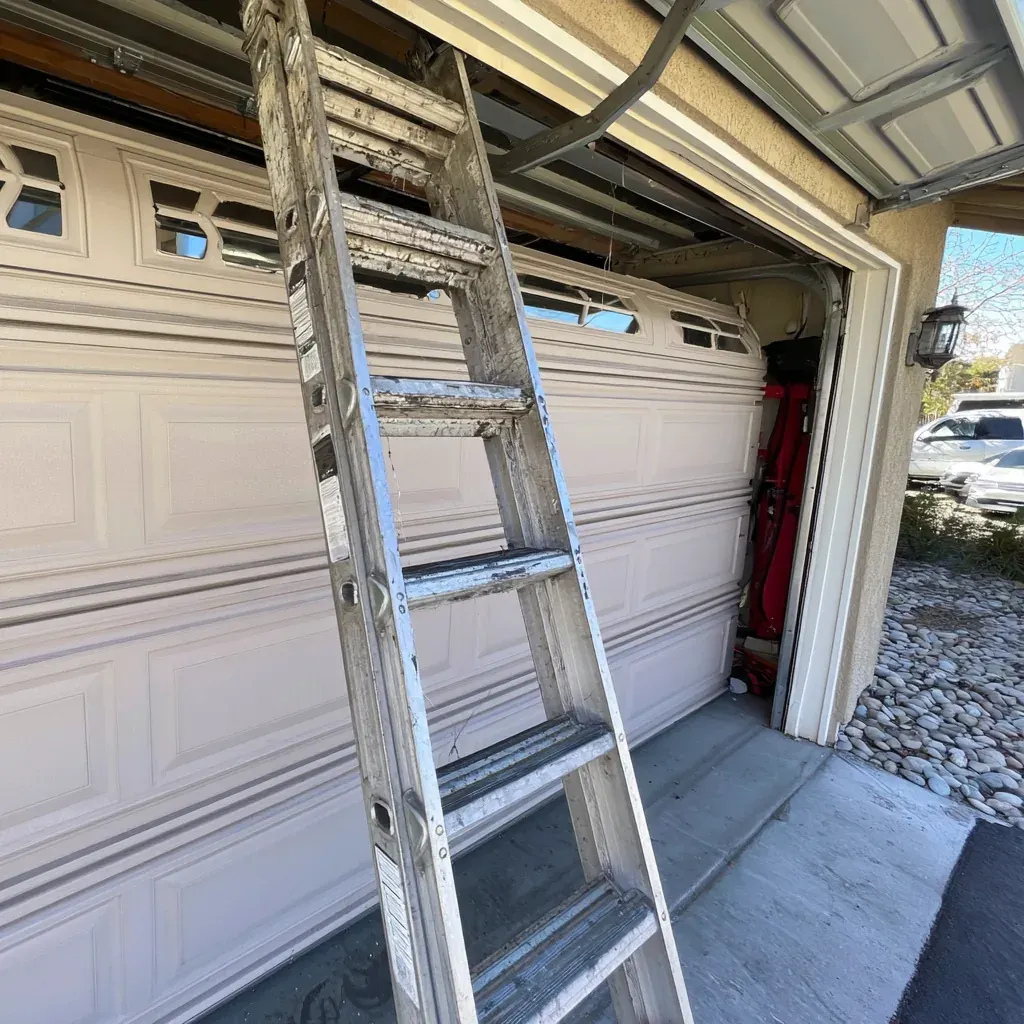
Jackshaft, trolley and hoist operators sized for daily cycling in Fishers warehouses and dock bays near Crosspoint Boulevard.
A commercial door opener is matched to duty cycle and mount, not horsepower. Jackshaft units mount beside the shaft for low headroom, trolley units ride an overhead rail for standard bays, and hoist units use a drum and cable for heavier or fire-rated doors that cycle often.
A commercial door in Fishers works on a schedule, not a whim. A loading bay off Crosspoint Boulevard, a shop door near Southeastern Parkway, a fire station bay near Municipal Drive all cycle on somebody's business hours, and the operator behind that door is sized for a job, not a driveway. Getting that sizing wrong shows up first as a motor that runs hot, then as a motor that quits mid-cycle on a Fishers morning when the dock needs to open.
Fishers shop and light-industrial bays off Southeastern Parkway and Crosspoint Boulevard don't sit closed the way a house door does. A door that rolls sixty or eighty times a day wears through a residential-grade opener fast, and the failure shows up as a stripped gear or a motor that trips its own breaker mid-cycle. A commercial operator is built around that repetition from the start.
The right operator for a Fishers building comes down to what the door actually does all day, not what it looks like closed. A distribution bay near USA Parkway running trucks through most shifts wears equipment differently than a shop off Municipal Drive that opens twice before lunch. Getting that match wrong either overpays for capacity nobody uses or burns out a motor months into the job.
A jackshaft operator mounts on the wall next to the door and turns the torsion shaft directly, so nothing hangs from the ceiling over the opening. That suits Fishers buildings with tight headroom, including shop space fitted with a high-lift conversion where the track already climbs higher than a standard door allows and a ceiling-mounted rail would be in the way.
Trolley operators run on an overhead rail and pull the door along it by chain or belt, the setup most retail bays near Crosspoint Boulevard already have the clearance for. Hoist operators lift a door straight up on cable drums instead of pushing it along a track, which is the usual choice once a door gets too heavy or too wide for a trolley to manage without sagging.
| Operator Type | Works Well For | Watch This Limit |
|---|---|---|
| Trolley operator | Standard sectional doors | Light to medium duty cycle |
| Jackshaft operator | Low headroom, finished ceilings | Mounts beside the shaft |
| Hoist operator | Heavy or fire-rated doors | Continuous or heavy duty cycle |
| Power feed | Single-phase for a small storage bay | Three-phase for doors that run all shift |
| Control station | Wall station with open, close, stop buttons | Limit who on staff can reach it |
| Interlock switch present | Cuts power if a nearby door or gate opens | Matters most where bays sit side by side |
| Duty cycle rating | Set by cycles per hour, not per day | Should match how often this door actually opens |
| Service record | Operator type and cycle rating written on the invoice | Saved so the next call starts from facts, not guesses |
A jackshaft operator mounts on the torsion shaft above the door and pulls the shaft directly, which suits low-ceiling bays common along Southeastern Parkway. A trolley operator rides a rail like a residential unit but built to a commercial duty cycle. A hoist operator lifts by chain or cable for heavier doors. Each moves the same door differently, and the wrong choice shows up first as strain, then as failure.
Duty cycle is the number that keeps a commercial operator from being sized like a residential one. It's a manufacturer rating of how many times an hour, and how many hours a day, a motor can run without overheating. A light-duty unit asked to run at warehouse pace near Crosspoint Boulevard will overheat and cut out long before a heavier-rated jackshaft or hoist operator would even warm up.
Three-phase power runs a larger commercial motor more efficiently than the single-phase current most Fishers buildings are wired for, which is why bigger hoist and jackshaft operators on heavier doors are often built around it. A building near Southeastern Parkway with three-phase service already in the panel has more operator options open than one running on standard single-phase branch circuits alone.
Fishers commercial and light-industrial space isn't one kind of building. It runs from retail bays and offices near the Nickel Plate District to shop and warehouse buildings out along Crosspoint Boulevard and Southeastern Parkway, with more scattered toward the interstate corridor near State Road 37. Each of those doors sees a different amount of use, and the operator behind it has to match that use rather than just the opening's size.
A retail unit near the Nickel Plate District might run its door a dozen times a day and close by evening, while a warehouse off USA Parkway runs closer to constant through a shift. Sizing both to the same duty cycle rating means one operator sits underused and the other gets pushed past what it was built to handle, which is when a motor starts failing early.
A tenant off Southeastern Parkway who can't roll up a bay door isn't scheduling a repair, they're losing a shift of trucks that can't load or unload. Fishers buildings that lease space to more than one business often have a door tied to another tenant's hours, which makes a control station failure a shared problem rather than a single owner's inconvenience.
A written record of the operator's model, duty cycle rating and last service date turns a breakdown near Crosspoint Boulevard into a short diagnosis instead of a technician guessing at unfamiliar equipment cold. Buildings that keep that record on file, even a simple one taped inside an electrical panel, get back open faster than ones where nobody remembers what was installed or when.
Fishers gets hard freezes most winters, and a commercial operator already running near its duty cycle limit has less margin left when cold thickens the grease and stiffens the door. A jackshaft operator pulling a door that is dragging against a frozen seal draws more current on every cycle, and that is when a motor that was already working hard starts tripping out.
Road salt is the steadier problem here, not heat. Salt tracked in on tires and boots off Southeastern Parkway and other de-iced stretches around Fishers works into the floor seal, the bottom bracket and the lower rollers all winter, and it corrodes hardware from the slab upward long after the snow itself is gone. A door that gets checked before spring catches that damage while it is still a bracket and not a bent track.
Fishers enforces the Indiana Residential Code through its own building department, and that reach extends into commercial work near USA Parkway and Crosspoint Boulevard too. Putting in a new operator on a door that already exists usually will not trigger a permit review, but the city makes that call, not a technician standing at the panel. Ask before the work starts if the building sits in a stricter occupancy class or the opening itself is changing.
A slab in a Fishers garage holds the cold longer than the air above it, so a door can be frozen fast to the concrete on a morning that otherwise feels ordinary. Forcing an opener against that bond tears the bottom seal instead of breaking the ice.Ridgefield, Brooks Chase and Pleasant View. Ask anyone here which morning the spring finally gave out and most name a stretch in January or February, the coldest run of the year. Grease that quit flowing days earlier left the torsion spring carrying load it was never built to hold alone, and the metal let go rather than bent.
Winter road treatment rides in on the tires of every car in the driveway and settles at the base of the door all season. It works upward from there, corroding the bottom brackets and lowest rollers first, which is a different failure path than rust that starts anywhere else on the door.A price here assumes a standard residential door on an attached Fishers garage, the kind that shares a wall with heated space off streets like Lantern Road or Cumberland Road. A commercial bay door, a wider opening or panel-lift hardware at a business near Crosspoint Boulevard runs a different parts list and a different labor estimate entirely. Full guide bands are on the pricing guide, and the commercial overview covers how a scheduled program works.
Multi-Unit & Portfolio
For Facility Managers
Fishers Roll-Up Doors
Generally, no. Swapping an existing commercial operator for a comparable replacement on an unchanged opening typically does not trigger a City of Fishers permit. Altering the opening itself is different and the city decides that. Ask the City of Fishers building department before ordering equipment if there is any doubt, since permitting is their call, not something a supplier or installer can settle for you.
Horsepower measures how hard a motor can pull. Duty cycle measures how often it can do that pulling in an hour before its windings build up heat and shut down or burn out. A dock door near Crosspoint Boulevard opening and closing all shift needs an operator built to run continuously, not one sized only for lifting weight a few times a day.
It depends on the operator, not the building. Some hoist and larger jackshaft units on heavier doors near Southeastern Parkway are built to run on three-phase power because it handles that motor size more efficiently than single-phase current. A licensed electrician can confirm what service already feeds a given building before any operator gets specified.
It's a safety switch wired into the control station that keeps the operator from running unless a door, slide bolt or adjoining gate has reached full closure. Without it, a motor could try to roll a door that a side door or gate is still blocking, or run a fire-rated door before it's fully seated in its track.
If a dock door near Crosspoint Boulevard or a bay off USA Parkway is tripping its control station, call and describe what the door does.
Call (317) 740-1539