A spring on a Fishers garage door does not wear out quietly. It lets go, often first thing in the morning, and the homeowner standing in the driveway wants a number before anything else. That number is not fixed. It moves with the size of the door, which spring failed, and whether anything else got bent on the way down. What follows is the reasoning behind the range, not a flat figure.
Torsion Springs Versus Extension Springs
Springs come in pairs because a door has two ends and each shaft carries even tension across the whole width. Fishers garages built during the 1990s through 2010s along the I-69 corridor mostly use torsion, a shaft mounted above the header with the spring wound tight. Wire size and inside diameter both change what a pair costs, and neither matches the other side of the door once one has stretched or snapped, so pricing quotes a pair even when only one has failed.
Why the Pair Gets Replaced Together
A torsion shaft over a Fishers garage door usually carries two springs, not one, wound in opposite directions so the shaft turns evenly as it lifts. They go on together and come off together. A tech who replaces just the failed side leaves a spring near the same cycle count sitting under full tension next to a brand new one, and the older one is the next thing to snap, often within a season, on a door in Sunblest or Britton Ridge that seemed fine the week before.
Standard Cycle Versus High-Cycle Springs
Torsion springs on tract houses near Sunblest or Britton Ridge usually get replaced in pairs even when only one side broke, since the other is close behind on cycles and a mismatched pair throws the door off balance fast. High-cycle springs cost more per pair but hold up better through a Fishers winter of daily openings, so the labor is the same call, just a different part going on the shaft above the opening.
Wire Size and Inside Diameter
Wire size and inside diameter are what a spring order actually specifies, not the door's weight alone. A slightly wrong wire gauge changes how much force the coil stores per turn, and a mismatched inside diameter binds against the shaft or leaves the door heavy on one side. Doors around Geist and the Nickel Plate District vary enough in age and panel weight that a tech measures the old spring rather than guessing from the door size or the year the house was built.
Heavier Doors and Vaulted Ceilings
Two-car doors with high headroom, common on newer builds around Britton Ridge and Brooks Chase, sometimes carry a longer torsion shaft or a second set of springs to manage the extra travel. That hardware costs more than the springs on a standard single-car setup near Sweet Briar. A homeowner comparing prices between two houses on different streets is often comparing two different spring setups, not two different quotes for the same job.
When a Cable or Drum Bends Too
A spring that snaps while the door is partway open can whip the cable off the drum or bend the drum itself, especially on a door someone kept trying to force closed. Checking the cables and drums is part of a proper spring call, not an upsell tacked on afterward. If either one is bent or frayed, replacing it alongside the springs adds to the bill but avoids a second failure within weeks.
What the Labor Line Covers
Winding a new torsion spring pair to the right tension is the part of the job that actually takes skill, since the spring is under enough load to injure someone if it slips. Labor covers removing the old springs safely, fitting the correct wire size and inside diameter, winding the new pair, and balancing the door so it holds still at any height without the opener straining to lift it.
Salt, Grease and a Slower Door
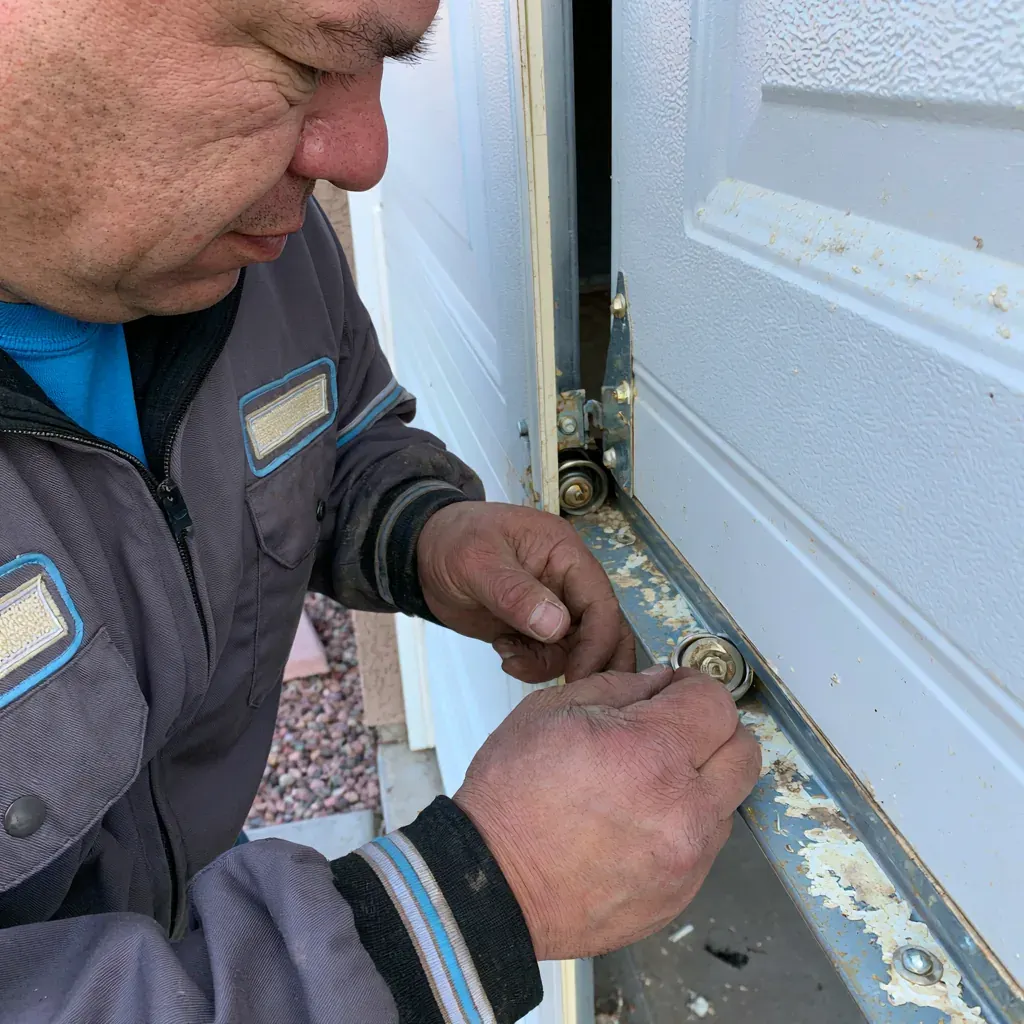
Salt tracked in off Allisonville Road and 116th Street through a Fishers winter lands on the floor first, and it works upward into the bottom bracket and the lower foot of the track before it touches anything else. Grease that has picked up that grit stops doing its job and starts acting like sandpaper on the coils. A tune-up alongside a spring job clears that grit out instead of leaving it to shorten the new spring's life.
Why January Is Busy for This
Fishers homes along the I-69 corridor were mostly built in one long stretch from the 1990s through the 2010s, so whole subdivisions have springs sitting at nearly the same age and cycle count today. Add a hard freeze and the steel that has been winding and unwinding for fifteen or twenty years finally snaps on a cold morning instead of a mild one. That clustering, not any single defect, is why phones across Hamilton County light up in January more than any other month.
What to Ask Before You Book
Indiana doesn't license garage door contractors, so there's no number to check before booking. What's worth asking instead: does the person carry general liability insurance, are they covered for workers compensation, and will they put the price in writing, wire size and cycle rating included, before touching the torsion shaft. Also ask whether labor is billed separately from the spring pair itself. A straight answer to those questions tells you more about who's showing up than any license ever would.
Getting a Real Number
A hedged range only goes so far because two doors with identical panels can carry different springs. Wire gauge, coil diameter, door weight and whatever the opener has been compensating for all move the final figure, and none of that shows up from the driveway. Someone has to look at the shaft, the drums, the cables and the opener side by side before a number means anything, which is what the free inspection from the licensed pros we connect you with is for.
Dealing with this in your home?
Fishers garages sit on slabs that go through the same freeze and thaw all winter, and meltwater from a sunny afternoon on Cumberland Road or 116th Street refreezes overnight into a bond between door and concrete. Force it and the bottom seal tears. Road salt tracked in off I-69 does the rest, working the bottom brackets and rollers from the floor up.